

Coding a new future | Oksana’s path from community college to tech apprenticeship
The Leon Levine Foundation provides $425,000 in emergency funding to combat food insecurity
November 10, 2025TLLF Launches Carolina Career-Connected Learning Challenge to Expand Pathways to Livable-Wage Careers
January 16, 2026When Oksana Feterosvkaya moved to North Carolina’s Triangle area from Uzbekistan in 2010 at 29 years old, she was trying to decide what she wanted to do with her life. Creative and curious, she’d been considering a career in computer programming.
She went to community college and graduated with an associate degree in web technologies with a major in web design. Two months later, she found out she was pregnant with her third child and she and her husband decided that Oksana would stay home to care for the children while her husband worked for the family income. When the kids were old enough to go to school, Oksana felt pulled and free to revisit her career.
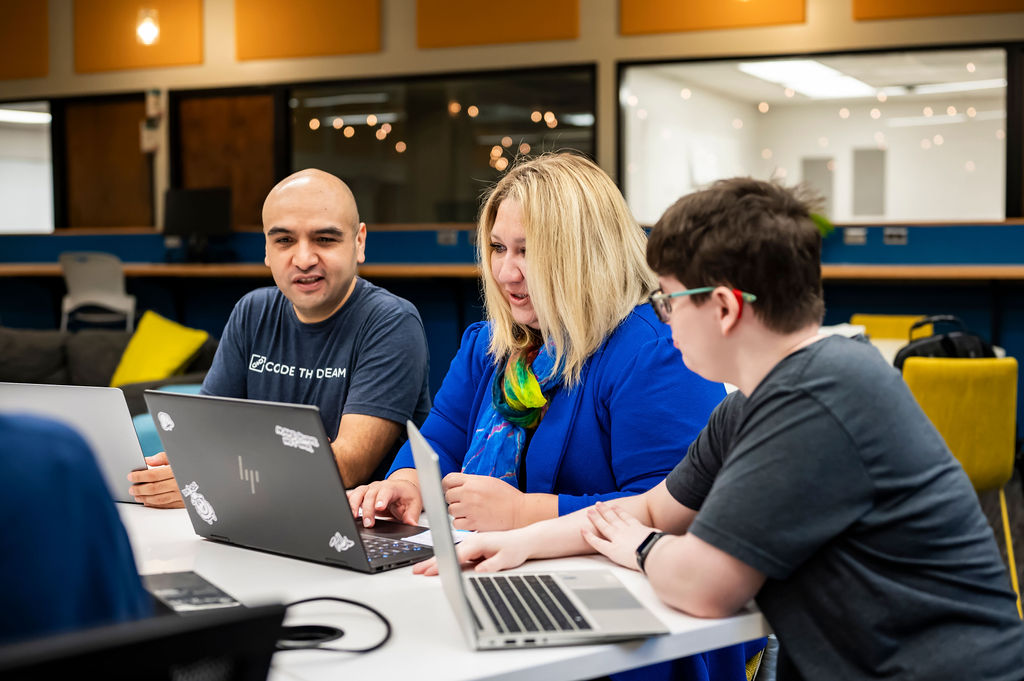
“With three children and one income, I couldn’t afford to pay for education one more time,” Oksana said. “But the gap in coding in the technology field is huge. Everything changes so quickly. I needed something to put me back on track from where I left off when I graduated. I needed to refresh what I knew and learn what I didn’t in order to be qualified for a job.”
Oksana had friends enrolled in classes with Code the Dream, a Durham-based nonprofit that offers free training in software development to people who might not otherwise have the opportunity to pursue tech jobs. This includes adults underrepresented in the tech industry, like people of color, immigrants and refugees, people from rural communities, and individuals from low-income backgrounds.
Oksana’s friends invited her to watch their final presentation, and she was blown away.
“Not only were they gaining this wealth of knowledge and putting it into practice, but they were making connections and getting jobs!” Oksana said.
Students in the Code the Dream program work with mentors who are professional software developers, experienced in the tech sector, and passionate about teaching.
“I was able to attend group sessions, study resources on my own, and meet with a mentor one-on-one,” Oksana said. “They really meet you where your needs are.”
At the end of each semester, advanced students are invited to participate in a practicum, a group project where they create a full-stack app from the ground up—building, testing, refining, and launching it.
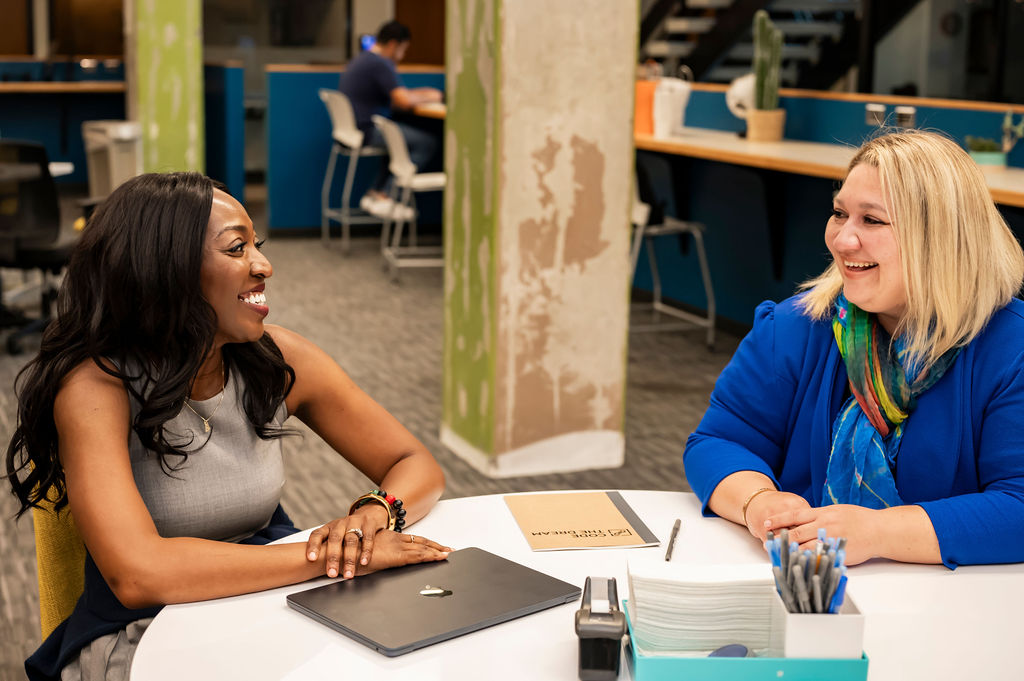
One of the most valuable aspects of the program for Oksana was the Russian group session, led by volunteers who are professionals in the field.
“For people whose first language is not English,” Oksana said, “it can take twice the effort to learn something. Additional support on language is crucial.”
Now, Oksana also serves as a mentor for Russian group sessions.
“I got so much support, and now I want to show support,” she said.
Her passion and dedication are evident. This year, she was nominated to be Mentor of the Month.
“I was so touched,” she said. “I see these students grow so much from when they come in until they graduate. It’s so crucial for all of us to build that solid foundation and go on to grow it.”
Upon completion of the Code the Dream courses, Oksana was offered an apprenticeship with CTD Labs, Code the Dream’s in-house tech-for-good initiative.
“This full-time program enables junior software engineers to gain real-world experience,” Dan Rearick, co-executive director at Code the Dream, said. “Apprentices work side-by-side with senior developers, building tech-for-good tools that help solve some of the most urgent but overlooked issues facing communities.”
Oksana has also worked with Lenovo through Code the Dream’s Tandem Apprenticeship program, gaining experience in a large corporation.
“I might just contribute one little line of code,” she said, “but for me, it means being part of something big.”
“CTD Labs projects have impacted more than 200,000 people, and our reach is expanding each year,” Daisy Magnus-Aryitey, co-executive director of Code the Dream, said. “So far, we’ve built tools that support farmworker outreach staff, connect people with low incomes to emergency relief, inform advocates working at a state legislature, and help North Carolina families find out which public benefits they qualify for, just to name a few.”
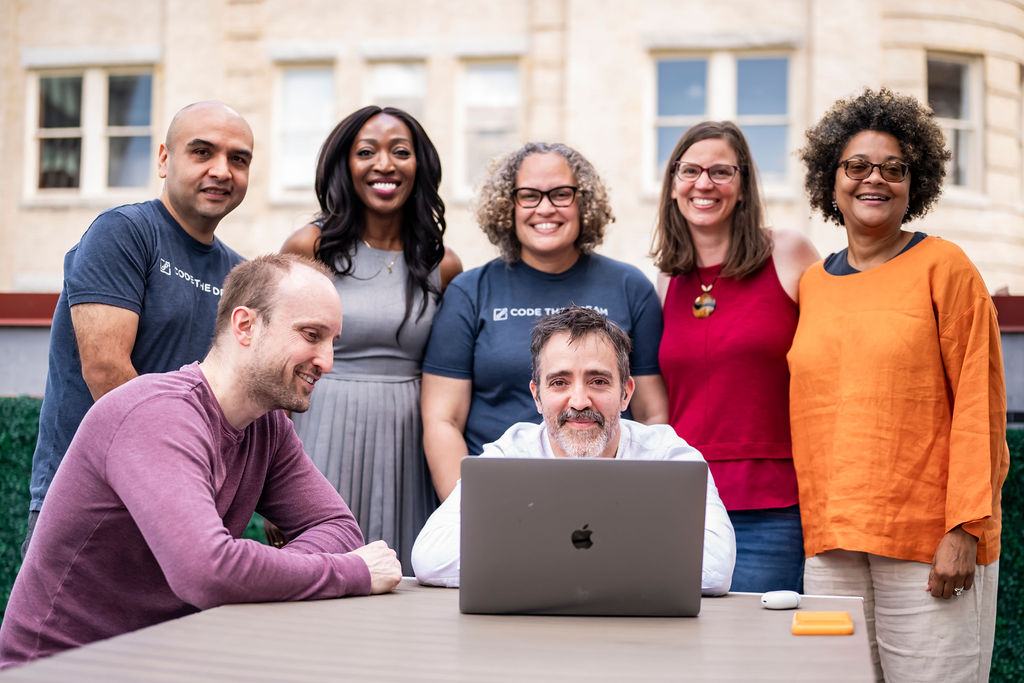
The apprenticeship typically lasts one year, with the option to extend for a second year, and includes a salary and benefits. With more than 80% of CTD Labs apprentices launching their careers in tech and earning an average starting salary of $80,000, the CTD Labs Apprenticeship opens life-changing opportunities for early-career software developers.
When Oksana’s apprenticeship ends, Code the Dream will help her prepare for the interview process to get a job she’s been working toward since 2010.
I went from community college, to stay-at-home-mom, to apprentice and mentor on my way to a promising career,” Oksana said. “Talk about a dream!”
As part of its grantmaking strategy, TLLF invests in career-connected learning and economic security initiatives to empower underserved Carolinians to be self-sufficient. In 2025, The Leon Levine Foundation supported the expansion of the Code the Dream apprenticeship program, which is often the final critical step toward launching a student’s career.