

Per Scholas Expands Workforce Training in NC with $7M Grant
The Leon Levine Foundation Awards $2.8 Million to Expand Maternal Healthcare Access in North Carolina’s Maternity Care Deserts
July 2, 2026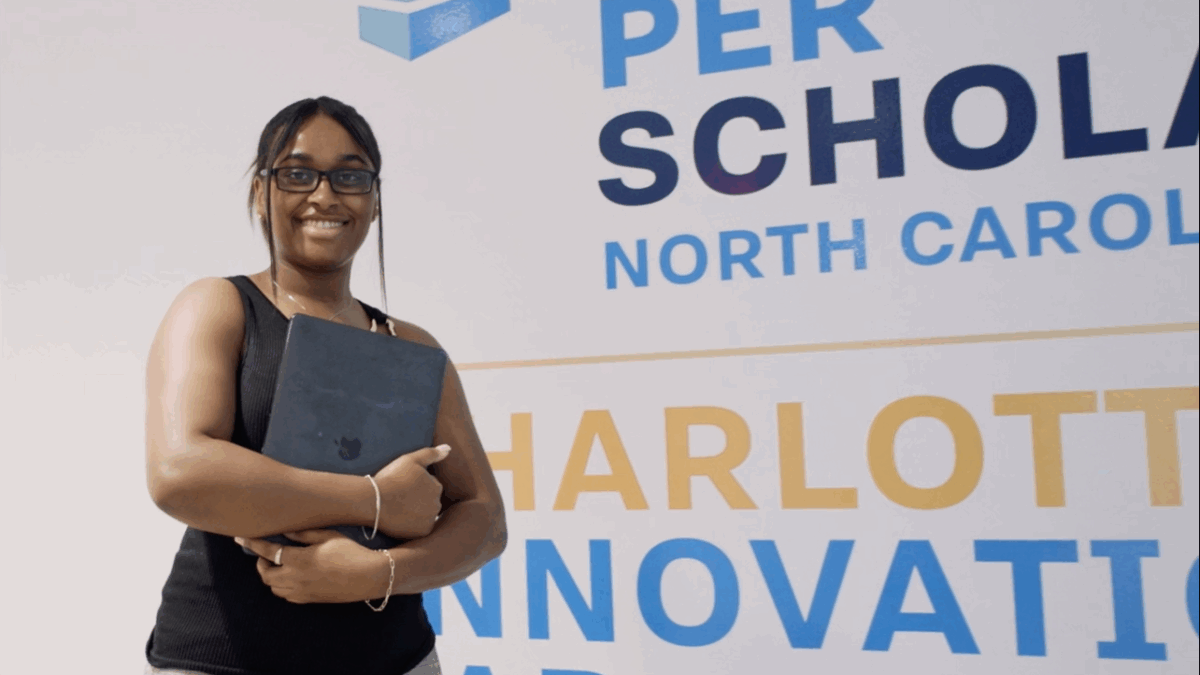
Last Christmas, Leslie Stevenson didn’t see a future for herself. She was working as a medication technician at an assisted living facility, overworked and depressed, with barely enough money to cover holiday gifts for her 11-year-old son. The single mom felt like there was no room to grow in her job, no clear next step, and no plan that felt like it would lead to anything promising.
Stevenson says, “I didn’t have a future. I didn’t see one.”
Today, she is a small business technical support agent at Spectrum, working toward a managerial role in IT. Her turning point came when she discovered Per Scholas, a nonprofit that provides no-cost technology training to adults seeking a foothold in the tech industry.
“I heard about Per Scholas. I did my research. I liked what they were doing,” Stevenson explains. “It was a free program and training for something I could see myself doing this for a long time.”
Stevenson enrolled in Per Scholas’ IT support course last January, one of roughly 1,300 North Carolinians who have gone through the organization’s 15-week immersive training programs since it launched in Charlotte in 2020. The program combined four days of technical instruction with a day of professional development, along with job placement support after graduation.
People like Leslie are the reason The Leon Levine Foundation recently awarded Per Scholas North Carolina a $7 million grant, distributed over five years, to help the organization scale its impact statewide. The investment will help Per Scholas grow its training capacity to 1,000 learners annually by 2030, serve an additional 330 Career Accelerator participants each year, and reach more than 3,000 learners over the life of the grant, an effort projected to drive a stunning estimated $3.9 billion in lifetime earnings impact for graduates.
“This grant from The Leon Levine Foundation represents an important step forward in expanding access to high-quality tech training across North Carolina,” says Mike Terrell, Managing Director of Per Scholas North Carolina. “With this support, we can reach more communities, strengthen our partnerships, and continue delivering the outcomes that help individuals build sustainable, long-term careers.”
Terrell says the funding will support new curriculum, additional campus locations, and expanded access for learners in rural communities and neighborhoods from the coast to the mountains. But for him, the real measure of impact is personal.
“When I see people like Leslie, I think about just the impact that it’s not only going to have on her, but on her community, on her son,” Terrell says. “She just started in this work, but in the next couple of years, undoubtedly she’ll be getting promotions and she’ll be making more money, and that’ll allow her to buy a house and go on vacation, things that she may have not had access to before coming to the program.”
For Stevenson, the change has meant more than a new job title, it’s a new sense of possibility, for herself and for her son.
“I have an 11-year-old son and I’m his only parent right now. I want him to see me succeed so he knows that his life is going to be okay, and that he has a bright future ahead,” she says. “I’m very proud of myself. I’m very proud of him, and I know he’s proud of me.”
Now, Stevenson shares her story and the details of the Per Scholas program with anyone who will listen. “I’m so grateful that wherever I go, I tell people about it all the time,” she says. “You may not like where you’re at today, but there is an opportunity that is for free that could help you get to where you want to be. Or if not, be a pathway to get you there.”